Because of my yellow skin, I must be good at Math’s? I am Asian so I am clearly a bad driver? Hey do you eat insects, spiders and rats, your Cambodian right?
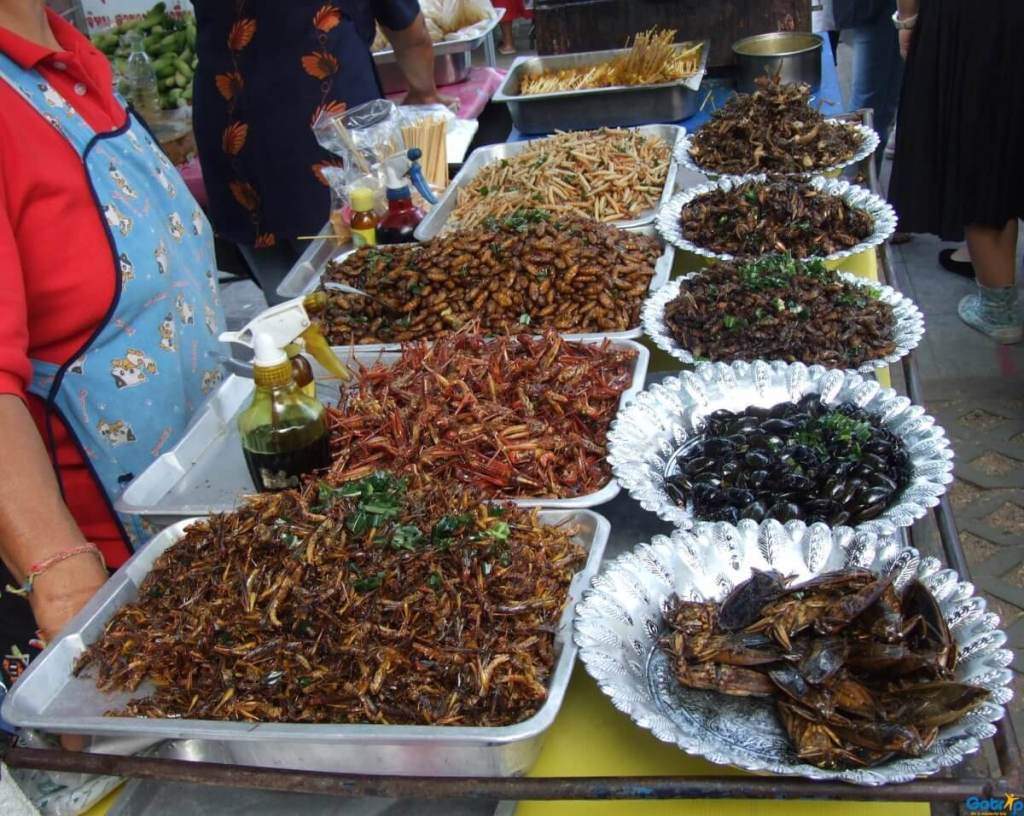
Photo courtesy of https://discoveryindochina.com/blog/why-do-cambodians-like-eating-insects/
This is my single story but we must delve deeper to understand each page, chapter, body and conclusion in my book, in our books. Every face you see in the classroom has a story, not just a single story but a book filled of content. If you look deeper you may be interested to see stories of heroism, courage and survival.
My people, Khmer people ate insects as a result of the Khmer Rouge Wars during the 1970’s, when Pol Pot infiltrated Phnom Penh and took the capital. He and his guerrilla army brutally killed the educated and uneducated or if the soldiers didn’t like you, you died some horrific way, babies were thrown into the openings of cliffs and civilians were kicked or hit on the back of their heads falling into the same cliffs to plunge to their deaths, you would hope you would die fast but some sadly didn’t and were left there to suffer and die slowly until they took their final breaths days later. The Khmer Rouge evacuated everyone to the rice fields leaving behind their homes, everyone worked on the paddy fields in a communist state, the dream of Pol Pot was to return Cambodia to Year 0, where every individual was equal. Around 1.7 million Khmer people lost their lives, interestingly 50% of Khmers today are under the age of 16 (Hume, Coren & Luu, 2015).
My mum use to sleep in a tomb in fear the Khmer Rouge would kidnap her in the middle of the night, my grandfather watched his young son bleed to death because there were no medical staff to help, my grandad escaped death many times – he had a bald patch on his head from a young age and that to the Khmer Rouge soldiers meant he was an educated man, a marked man. My family lived in a refugee camp in Khao I Dang for 11 years because of the war. Growing up my mum and dad often told me and my siblings we are lucky to never know what hunger feels like, during the War food was rationed and scarce. My family would eat a few grains of rice with water and that was it. This was given once or twice a day, they were literally starving to death. Sadly many Khmer people, adults and babies all succumbing to the same fate. My dad sometimes caught bugs and rats to eat, and he always told me even that was hard to find. I share these stories because these are my families, my history, my people, they are mine. I would happily eat rats, insects, spiders you name it knowing the history behind it and what my family has been through.
Rather than taking stereotypes as fact and at face value as teachers, it is important to form strong relationships with our students. Understand their struggles, academic history, families, likes, dislikes, inequalities to look beyond the face value and dig deeper with not just a shovel but a excavator (Saran & Diaz, 2010).
Stereotypes lead to inequalities, disparities between our students and ultimately giving the dominant culture a competitive advantage, over time low expectations from teachers lead to low expectations of themselves for our students which is then a direct result of unsuccessful schooling and thus a non global citizen and definitely not a lifelong learner. Successful schooling is the foundation of a successful career outside of school, this is not to say this is always the case but schooling is a direct result of higher paying jobs. To stereotype and not discover the full story is to marginalize our students and pigeonhole them into being what we perceive in a narrow state and thus not allowing social justice for our students (Skiba, Mediratta & Rausch, 2016).
The stereotype is not untrue it is incomplete. So I challenge you next time to look beyond the stereotype?
Hume, T., Coren, A., & Luu, C. (2015, April 16). Scars of the Khmer Rouge: How Cambodia is healing from a genocide. CNN. Retrieved from https://edition.cnn.com/2015/04/16/asia/cambodia-khmer-rouge-anniversary/index.html
Saran, R., & Diaz, R. (2010). Beyond stereotypes : minority children of immigrants in urban schools. Sense. Retrieved from http://search.ebscohost.com.ezproxy.aut.ac.nz/login.aspx?direct=true&db=cat05020a&AN=aut.b12492759&site=eds-live
Skiba, R., Mediratta, K., & Rausch, M. K. (2016). Inequality in school discipline : research and practice to reduce disparities. Palgrave Macmillan. Retrieved from http://search.ebscohost.com.ezproxy.aut.ac.nz/login.aspx?direct=true&db=cat05020a&AN=aut.b23660624&site=eds-live


 Diary of the beginner teacher...
Eating insects is going to save the world. Sorry, mildly off topic I know, but I’m pretty sure that that was the next massive hipster wave – eating crickets grown in a lab as an eco-friendlier source of protein. The world is starving and it is time to stop wasting resources.
Wow, that sounded far more callous than I meant it to.
I love the metaphor of a student being a book, not a single story. Reading between the lines of a paragraph, we can extrapolate information, the same way looking beyond the stereotype can reveal information from a culture – both good and utterly horrific. It might just be the genocide museum researcher that I secretly am, but there can never be enough of a reminder that the past is full of examples of people doing horrible things to each other for reasons that don’t make sense to us now.
In any case, Gordon Ramsay should have included tarantula on the menu for the royal dinner. I think Lizzy would have engaged protocol mode and eaten them like a boss, looking him in the eye the whole time.
LikeLiked by 1 person
This is amazing, I feel this. Often times what happens is that people who receive stereotypes like these call the words uttered as ‘ignorant’. That turn of phrase has always interested me because honestly I find that it is 100% true. A lot of comments I’ve personally heard and that others have heard are essentially due to poor understanding. It seems that the comments they say make total sense from their perspective. That’s how they feel. That’s why they make those comments; because it does not feel ‘off’ to them in any way. But, of course, this is because they don’t have the understanding. In spite of how they feel, it can be really uncomfortable for the person listening because it doesn’t in anyway fit into the listener’s view of the world and as a result amounts to anti-social behaviour.
Sadly, these things happen with students as well and it should serve as evidence of an insufficient level of trust, understanding and rapport.
LikeLike
Kia Ora, Anna
You got me at “stereotypes”. As an Asian girl myself, I grew up feeding my own persona with stereotypes thrown at me. I agree with you wholeheartedly to know one’s history and culture before throwing shade, reading about your family history was very heartfelt. Connecting this raw, untouched truth to the Anna I know makes me feel so much more aware and connected to you someway or the other. You are now living your family’s legacy, their sacrifices, and their relief. You’re right, there’s more to “ew you eat insects”, there’s a story behind it and if we as teachers take the time to listen to our students’ stories then we’ve created that strong relationship that is so necessary between teacher and student. Along the way, we can take the opportunity to also teach our students about our own history, ”Ni hao!!!” “no, I’m not Chinese”, “Guess again” ….” Japanese” …” again?”…” you’re really not from China?”….*sigh*
Also, I’m totally down to try some fried insects, insect-eating is becoming quite hip (so is Korean food… it’s been around for centuries *shakes head*).
LikeLike