Featured

My First Blog Post.. socio-cultural practice

This is the first post on my new blog. I’m just getting this new blog thing going…

To understand teaching as a socio-cultural practice is to understand the importance of theory, no fact/opinion comes without theory. You got it your not the first to think of it, chance is there is some sort of long standing historical literature to support your bright ideas. Theory supports research and teaching reflective practices. It is at the core of teaching and student learning.

Teaching? Teaching is professional, in order to teach effectively one must understand ones stance, aims, hidden curriculum, philosophy, values and who and what makes them who they are.

Socio-cultural practice? The socio-cultural jigsaw by Bell best explains this. Its complex, like a jigsaw it interlocks, each piece interrelated having a place in the bigger picture. Made up of 9 concepts, Relational, Social, Cultural, Emotion, Caring, Ethical, Embodied, Spatial and Political.

I wont discuss all 9 concepts but some that resonate with me, relational, social context? Teaching is not something we as teachers do by ourselves, who do we teach; students, therefore it is very much a social act. Interaction in teaching between students and teachers is a social practice. The essence of teaching is building relationships, without relationships between student and teacher teaching would be difficult, that is probably an understatement. In order to be inclusive we look to collaborate in partnership, construct knowledge together further building these relationships, thus is relational.

During my time on placement and like my 2 year old son often configures his puzzles, life and teaching isn’t like a perfect puzzle. Yes every piece may have a place to form some perfect image. One size does not fit all, it may have a certain shape and look like it fits in that certain area but who are we to say it actually goes there. My son often argues with me that his purple circle goes on top of the pinkish purple area, I often correct him that it goes on the darker purple one, the one I deem correct. But in actual fact people see things in different ways and that puzzle piece may fit there but in fact it makes sense in the world I have constructed thus its important to understand whom we are as teachers.

Jet plane or dinosaur footprint

I don’t correct my son now, he said to me the other day when I passed him a lolly jet plane, ooh mum that is a dinosaur foot. And I stopped to think and said to my son yes it is, we see the world in different ways and teaching is very much a socio-cultural practice, it consists of many pieces which we must construct our own knowledge and meaning from in a ever changing world.
Stereotypes are not untrue, they are incomplete… Chimamanda Ngozi

Chimamanda Ngozi words are Powerful…single stories don’t tell whole stories, if you begin to think single stories are who people are they will become what you think of them, the stereotypes you envision. They become the deficit theory of your thoughts!

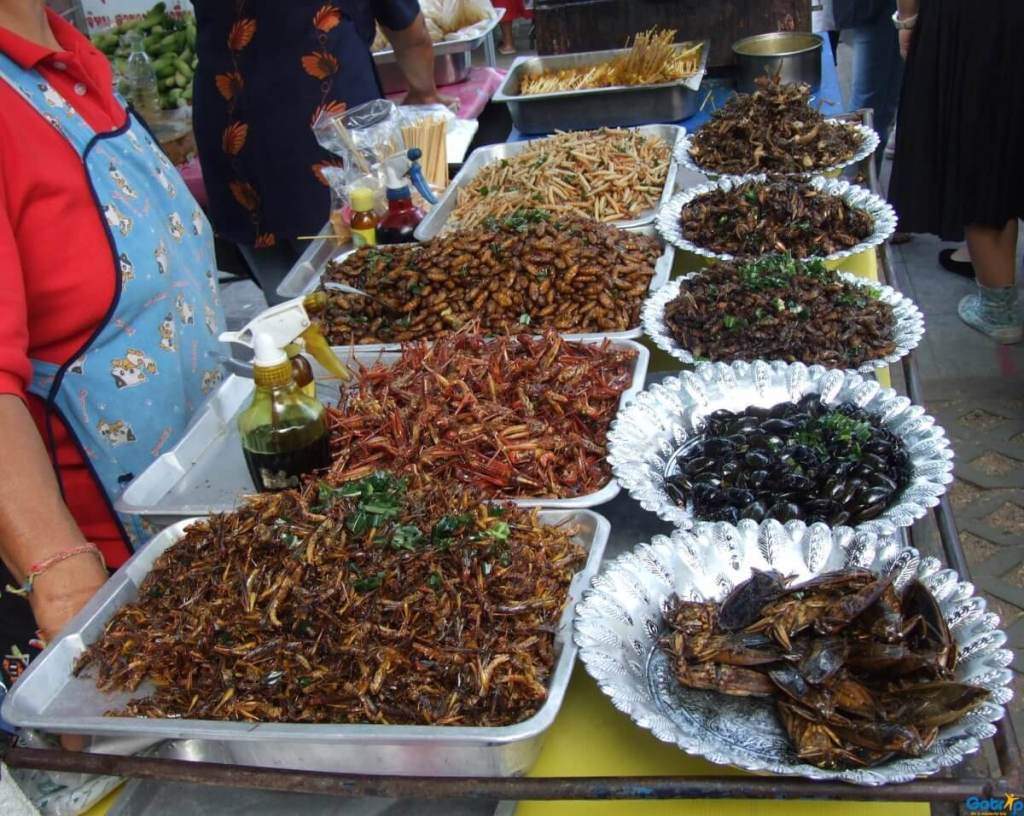
Because of my yellow skin, I must be good at Math’s? I am Asian so I am clearly a bad driver? Hey do you eat insects, spiders and rats, your Cambodian right?

Yumm insects, I tried searching my own pictures for photos but could not find any that did it justice. Here is one from good old google!
Photo courtesy of https://discoveryindochina.com/blog/why-do-cambodians-like-eating-insects/

This is my single story but we must delve deeper to understand each page, chapter, body and conclusion in my book, in our books. Every face you see in the classroom has a story, not just a single story but a book filled of content. If you look deeper you may be interested to see stories of heroism, courage and survival.

My people, Khmer people ate insects as a result of the Khmer Rouge Wars during the 1970’s, when Pol Pot infiltrated Phnom Penh and took the capital. He and his guerrilla army brutally killed the educated and uneducated or if the soldiers didn’t like you, you died some horrific way, babies were thrown into the openings of cliffs and civilians were kicked or hit on the back of their heads falling into the same cliffs to plunge to their deaths, you would hope you would die fast but some sadly didn’t and were left there to suffer and die slowly until they took their final breaths days later. The Khmer Rouge evacuated everyone to the rice fields leaving behind their homes, everyone worked on the paddy fields in a communist state, the dream of Pol Pot was to return Cambodia to Year 0, where every individual was equal.  Around 1.7 million Khmer people lost their lives, interestingly 50% of Khmers today are under the age of 16 (Hume, Coren & Luu, 2015).

My mum use to sleep in a tomb in fear the Khmer Rouge would kidnap her in the middle of the night, my grandfather watched his young son bleed to death because there were no medical staff to help, my grandad escaped death many times – he had a bald patch on his head from a young age and that to the Khmer Rouge soldiers meant he was an educated man, a marked man.  My family lived in a refugee camp in Khao I Dang for 11 years because of the war. Growing up my mum and dad often told me and my siblings we are lucky to never know what hunger feels like, during the War food was rationed and scarce.  My family would eat a few grains of rice with water and that was it.  This was given once or twice a day, they were literally starving to death.  Sadly many Khmer people, adults and babies all succumbing to the same fate.  My dad sometimes caught bugs and rats to eat, and he always told me even that was hard to find.  I share these stories because these are my families, my history, my people, they are mine. I would happily eat rats, insects, spiders you name it knowing the history behind it and what my family has been through.

Gordon Ramsay eating tarantula!

Rather than taking stereotypes as fact and at face value as teachers, it is important to form strong relationships with our students. Understand their struggles, academic history, families, likes, dislikes, inequalities to look beyond the face value and dig deeper with not just a shovel but a excavator (Saran & Diaz, 2010).

Stereotypes lead to inequalities, disparities between our students and ultimately giving the dominant culture a competitive advantage, over time low expectations from teachers lead to low expectations of themselves for our students which is then a direct result of unsuccessful schooling and thus a non global citizen and definitely not a lifelong learner. Successful schooling is the foundation of a successful career outside of school, this is not to say this is always the case but schooling is a direct result of higher paying jobs. To stereotype and not discover the full story is to marginalize our students and pigeonhole them into being what we perceive in a narrow state and thus not allowing social justice for our students (Skiba, Mediratta & Rausch, 2016).

The stereotype is not untrue it is incomplete. So I challenge you next time to look beyond the stereotype?

Hume, T., Coren, A., & Luu, C. (2015, April 16). Scars of the Khmer Rouge: How Cambodia is healing from a genocide. CNN. Retrieved from https://edition.cnn.com/2015/04/16/asia/cambodia-khmer-rouge-anniversary/index.html

Saran, R., & Diaz, R. (2010). Beyond stereotypes : minority children of immigrants in urban schools. Sense. Retrieved from http://search.ebscohost.com.ezproxy.aut.ac.nz/login.aspx?direct=true&db=cat05020a&AN=aut.b12492759&site=eds-live

Skiba, R., Mediratta, K., & Rausch, M. K. (2016). Inequality in school discipline : research and practice to reduce disparities. Palgrave Macmillan. Retrieved from http://search.ebscohost.com.ezproxy.aut.ac.nz/login.aspx?direct=true&db=cat05020a&AN=aut.b23660624&site=eds-live

Why are we failing?

Why are we failing so eloquently?

Lower expectations from teachers only seeds low expectations for students, higher expectations give already high achieving students an overall competitive advantage.  Our education system seems so unfair, doesn’t it?  But… it supposed to be free and equal to all, clearly there continues to be a dividing gap in our schooling system for many reasons, it is never an easy discussion of topic.  Especially because it may feel like we are pointing fingers, its someone’s fault, right?  As the emergent teacher it is hard to grasp the concept that I hold the power to make a difference in young people’s lives and changing this divide through my own expectations.  My actions can determine the outcomes of this continual educational gap for our young tamariki. 

Wealth and poverty have continued to grow within New Zealand among those that have and those that have not.  This gap between schools within New Zealand have continued to grow as well, each run as a separate entity.  If schools were fair, why do students continue to travel distances to attend schools not within their neighborhoods.  And those schools with lower deciles hard to overcome stigma that is associated with being a lower decile?  Schools are dependent on local board of trustees and the school body within to run day to day school life.  This is known as the law of school choice.  Schools have the right to choose governance and laws for students to abide by in order to benefit them as a whole.  In a social market the Government encourages uniformed standards that offer all students and equal chance to schooling.  The culture of the school is important in order to lift students achievements and access to basic needs to ensure students come to school ready to learn.  Professional development must be implemented among educators in order to benefit our children and to further encourage learning, though there continues to be a divide in our schools within those that achieve and those that do not (Gordon, 2003).  So what are schools doing right and what are schools doing so wrong?

Interestingly today in class we read an article that grouped Asians with Pakeha, and stereotyped Asians as being the highest achievers in Mathematics, sounds about right?  For one I am a first-generation Kiwi born Khmer person so Asian in short terms, I hate Maths and dropped it in Year 12 after it was no longer compulsory.  This effect of pigeon holing is another reason why we fail, pigeon hole students to do subjects that us Asians are supposedly good at?  Because of my skin colour?  I have seen on Practicum at a higher decile school student are navigated to go to overseas universities or local universities where at lower decile schools’ students are pathway into trades or to courses with a mere 5% if that going to University?  Not to say trades is less of a job that going to University as my husband is a builder so not disrespect but we are pigeonholing students and giving them or not giving access to certain jobs and services before they even start their adult life.

“We’re just teaching them for ‘Achieved’. They are not capable of ‘Excellence” (Turner, Rubie-Davies, Webber & NZ J Educ Stud, 2015).  This statement enrages me but all too often this is shared among many educators and it is wrong, we are all capable of reaching for the stars.  I have read we are all born creative geniuses and beautiful minds, but our education will be the unmaking or concurring of this brilliance (Anand, J & Anand, 2015).  Maybe next time when we are in the classroom we should ask ourselves what are we doing to change the gap or are we continuing to widen the gap between our haves and have not’s.

Take a page out of the relentless principle, we as teachers can make all the difference in a students life! “I don’t want my teachers to teach out of obligation, you don’t need to be here. Go somewhere else!”

– The Relentless Principle.

Reference

Anand, D. J. S., & Anand, P. M. S. (2015). Genius: Our Lost Priority! Studying the Imperatives of Education. Language in India, 15(5), 407–416. Retrieved from http://search.ebscohost.com.ezproxy.aut.ac.nz/login.aspx?direct=true&db=ufh&AN=102787162&site=eds-live

Gordon, L. (2003). School Choice and the Social Market in New Zealand: education reform in an era of increasing inequality. International Studies in Sociology of Education, 13(1), 17. Retrieved from http://search.ebscohost.com.ezproxy.aut.ac.nz/login.aspx?direct=true&db=edb&AN=11674627&site=eds-live

Turner, H., Rubie-Davies, C.M. & Webber, M. NZ J Educ Stud (2015) 50: 55. https://doi-org.ezproxy.aut.ac.nz/10.1007/s40841-015-0004-1

Truancy in schools..

“..those who are truant are at significant risk for developing additional difficulties—poor academic performance, delinquency, school dropout, employment problems, and earlier and increased substance use and abuse, among others ” (Mallett, 2016, p.337).

Let me write an acrostic poem about the word Truancy to help us all understand what truancy means?

Teachers not caring,

Rebel students that do not confine to rules or regulations of school,

Underestimated kids being dismissed, marginalised and thus eventuating to low expectations of themselves

Abundance in numbers particularly in our Maori and Pasifika students

Not my problem? Then who’s problem? A strong view shared by some teachers.

Come on guys and gals open your eyes if we are to become teachers then it is our problem…

You make a difference not solely you, parents, teachers, school management, we can all make a difference by paying attention, whats being done for our at risk students?

Some teachers see truancy as reducing the teaching numbers in their class, lucrative isn’t it?

Truancy can come down to a number of factors mainly seen in New Zealand schools factors such as poverty, teacher/student relationships and the classroom dynamic – is the class safe, content interesting and does the classroom motivate an exciting learning environment.  Studies have shown in Pasifika students our schools should model inclusion amongst our Maori and Pasifika parents inorder for students to succeed, a collaborative open relationship helps with truancy. Studies by Baleinakorodawa, Nakhid and Poata-Smith, have shown that truancy largely rests on schools and teachers being able to create a safe environment for families and students (2009).

Truancy among our priority learners are among the highest, Pasifika and Maori students are more likely to be truant than those that are of Pakeha descent. Some teachers only pay attention to students that want to learn. I have experienced this in Practicum, its a sad reality in our lower decile schools in New Zealand.

I have seen though some programs that are working with whanau to encourage a positive school environment for students and also professional development to encourage teachers to teach content that is exciting and allows students to be active and life long learners.

Lets all rally together and break the cycle of truancy, if students dont attend class or wag school they cannot then succeed in our schools!

Baleinakorodawa, L., Nakhid, C., & Poata-Smith, E. (2009). Causes of truancy from mainstream education for a group of Pasifika students enrolled in alternative education : a thesis submitted to Auckland University of Technology in partial fulfilment of the requirements for the degree of Master of Arts in Social Sciences, 2009. Retrieved from http://search.ebscohost.com.ezproxy.aut.ac.nz/login.aspx?direct=true&db=cat05020a&AN=aut.b11605819&site=eds-live

Mallett, C. (2016). Truancy: It’s Not About Skipping School. Child & Adolescent Social Work Journal, 33(4), 337–347. https://doi-org.ezproxy.aut.ac.nz/10.1007/s10560-015-0433-1

Intersectionality?

Intersectionality, what does this mean?

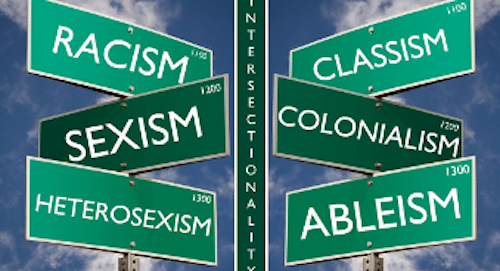
Intersectionality, what the heck does that mean?  I had never come across it before in my everyday life, but as I embark on the Provocations paper it is one of hot topic.  So what is this “Intersectionality.”  A term conjured up by American law enthusiast Kimberlé Crenshaw in 1989, one would call her an expert in race and feministic law.  In 1976 Kimberlé was investigating a case where black women could not receive secretarial roles at General Motors, where the white female employees were freely given these types of roles.  Black men on the other hand were automatically given factory roles.  An issue that debarked the issue of both race and gender.  Atrocious both injustices at the same time, it had never been heard of previously.  This formed the word “Intersectionality” as US law did not account for both issues together only as separate entities, it was either racist or sexist not both.  Intersectionality relates closely to its sister term feminism but also identifies the wider umbrella which includes a variety of social, political prejudices which intertwine with the female gender.  But contrary these terms may be strongly linked and related feminist don’t quite like the term ‘intersectionality’ as feminist don’t agree how some women can be advantaged than other women.  Feminist believe that as women they have the same commonalities and struggles as women (D’Cruz, 2019).

Crenshaw’s term when originally derived focused heavily on race and gender.  In modern day this has been exaggerated to include different aspects such as disability, sexuality and the list is never ending, goes on and on.  Scholars argue that yes it has a place in modern day theory but the specifics have not been implemented and has much room to be misinterpreted and weaved into different ideas as the fundamental grounding is limited.  Also limiting this idea of intersectionality as being derived and specific to the US in times where black people were being oppressed (Hancock, 2016).

Adolfo Aranjuez writes this becomes an ‘Oppression Olympics.’

He states the following “as a young, brown, queer, effeminate migrant with mental illness … I’m a minority on six levels, trumping a middle-aged, straight white man” (D’Cruz, 2019).

Aranjuez states we are doing ourselves an injustice by putting names on everything, what was intended to explain race and gender has now been a label for every injustice.  What we need to be doing is uniting with each other rather than segregating our differences.  We should rally up together to identify our differences.  Like in schools are differences are to be celebrated not ostracised and segregated to the point students feel isolated.  Let’s lift each other up for our differences.  It is important to identify that we are all different but at the end of the day we are all human, so if we respect each other for our differences that should outshine any prejudices and hate.  We all have a common goal and that is to be happy and live our own lives however we choose to live it.

D’Cruz, C. (2019, February 28). Explainer: What does ‘intersectionality’ mean? Retrieved August 8, 2019, from http://theconversation.com/explainer-what-does-intersectionality-mean-104937

Hancock, A.-M. (2016). Intersectionality : An Intellectual History. New York, NY, United States of America: Oxford University Press. Retrieved from http://search.ebscohost.com.ezproxy.aut.ac.nz/login.aspx?direct=true&db=edsebk&AN=1084660&site=eds-live

I am…

Like renowned painting, I am by New Zealand’s Colin McCahon… its unapologetic raw and owns up to who he is, this is who he is! The question faced by many adolescents is who am I, what will I do when I finish school, students are faced with conflict into self discovery whether with gender, sexuality, personality its all their swarming among students, so many questions, how will we adolescents ever find the right answer. I love Colin McCahons painting as it tells viewers I am…

You may not like it but I am not going to apologise for who I am, accept me for who I am, appreciate me, I don’t care if you like it or not I am going to keep doing me! It depends largely on how he views himself, you may not understand what his painting symbolises, it may be a bunch of random brush strokes, you may think you too can do something like this. He does not care what you think, this is him… I am this painting…

Colin McCahon, I am 1954

I think this can be strongly related to the discussion of identity. We all come with an identity built from our heritage, culture, beliefs, family and social along with political ideology. Identity from Tatum (2000) is based on what the world around us says we are. But to McCahon he doesn’t care, he is who he is. Not what the world tells him to be.

Tatum (2000), “Who am I now?” “Who was I before?” “Who will I become?” The answers to these questions will influence choices about who one’s romantic partners will be, what type of work one will do, where one will live, and what belief system one will embrace. Choices made in adolescence ripple throughout the lifespan.”

This puts a lot of pressure on adolescents to figure themselves out and become a certain way. Who we become is not necessarily the most important aspect in life whats important is that we accept ourselves for who we are. Be comfortable in our own skin and our own being. Life is to short to worry about what the next person thinks of us, accept your flaws, be comfortable in your own skin. You are beautiful in all your imperfections like Colin McCahon I am…. Me, life, amazing…

I am beautiful.

Tatum, B. D. (2000). The complexity of identity: “Who am I?.” In Adams, M., Blumenfeld, W. J., Hackman, H. W., Zuniga, X., Peters, M. L. (Eds.), Readings for diversity and social justice: An anthology on racism, sexism, anti-semitism, heterosexism, classism and ableism (pp. 9-14). New York: Routledge.

I am beginning to think its not safe to voice any opinion, let alone my own?

Today someone said to me my comment could be seen as racist? The thought of someone thinking I was racist bewildered me…me racist? It got me thinking, was I racist? Was all my conversations being overheard and analyzed? Will they be used against me?

So what did I say to be called the big r word? I said to a friend when a gentlemen continued to pay her attention ‘must be your Asian persuasion.’ Wasn’t this acceptable, it was said among friends whom are both Asian?

Now did I need to say that probably not, did my Asian colleague take offense to it? No? Was it racist?

Louisa Allen writes about how schools, often skew to heterosexuality and that homosexuality is something of a taboo/unspoken norm in schools. For example school uniforms females being checked for jewellery, makeup and short skirts encourages this sexualisation of gender. Insinuating that females wear these types of items where males don’t. Growing up this was done at schools I attended and honestly I never thought anything of it.

Point of this example is do I need to worry that everything has so many different meanings to everybody? Are we all being scrutinised under a microscope? In that case how will I ever know what is deemed acceptable?

I just heard on Radio NZ – Gender Stereotypes and Toilet Training Children, chatting about Huggie’s and their toilet training guide. Stereotypes that many parents have been guilty of – superheroes and competition associated with boys. Girls stereotyped by stories of princesses, cleaning. Haven’t we all been guilty of these gender stereotypes? My son’s room is filled of blue clothes, toys that we would deem boys toys, dinosaurs, trucks and cars. So actually when I listened to the radio hosts, I get where they are coming from but actually in my own home I am the number one culprit of gender stereotyping.

Help? Its becoming hard to say anything in case someone overhears and becomes offended? How do we determine what is acceptable to say? In the 50’s this was all acceptable. In the 21st they are not and in the 30th century what will be acceptable then?

This has begun many discussions around the dinner table, am I a racist? What can we say, what cant we say. Its still an open discussion.. Comments warranted:)

Allen, L. (2006). Keeping Students on the Straight and Narrow:Heteronormalising Practices in New Zealand Secondary Schools [Abstract]. New Zealand Journal of Educational Studies,41(2), 307-327. doi:10.1002/ev.20331

Gender Stereotypes and Toilet Training Children [Transcript, Radio broadcast]. (2017, July 25). Auckland: Radio NZ.

Design a site like this with WordPress.com
Get started